
Life Skills and Independence
Developing independence is an important part of preparing children and young people for everyday life. I provide meaningful, practical learning experiences that help each learner build confidence, participate more fully in familiar routines and develop skills they can use at home and within their community.
Activities are carefully matched to the learner’s age, current abilities, interests and aspirations. Tasks are broken into manageable steps and may be supported through modelling, visual instructions, checklists, repetition and gentle encouragement. Support is gradually adapted as confidence and independence grow.
Developing Everyday Independence
Everyday routines provide valuable opportunities for learning. I support learners to develop skills such as organising their belongings, preparing what they need for an activity, following familiar routines and completing purposeful tasks.
Each achievement is recognised and valued. The focus is not simply on completing a task, but on helping the learner feel capable, involved and increasingly confident in doing more for themselves.
Cooking and Food Preparation
Cooking provides a rich and motivating context for developing independence, communication, literacy, numeracy and practical life skills.
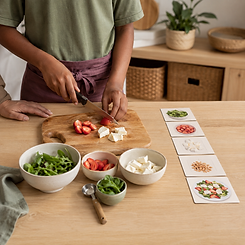
Learners may follow visual recipes, select ingredients, measure quantities, use kitchen equipment and prepare simple meals or snacks. Safe working practices—including hygiene, cutting skills and using appliances—are introduced carefully and developed at an appropriate pace.
Activities are adapted to reflect individual sensory preferences, confidence and experience, allowing learners to participate in ways that feel safe and achievable.
Money Skills and Shopping
Money skills are developed through realistic, purposeful experiences. Learners may create shopping lists, compare prices, recognise coins and notes, calculate totals, pay for items and check change.
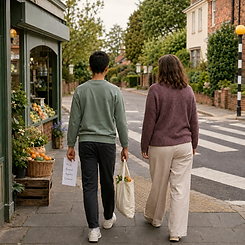
Where appropriate, these skills are practised during visits to local shops, helping learners connect their learning with everyday situations. Activities also encourage decision-making, communication, planning and greater confidence when accessing the community.
Community Access and Safety
Purposeful community-based learning can help children and young people become more confident and aware of the world around them.
Activities may include planning and following a route, visiting local shops and facilities, practising road safety and becoming familiar with expected routines in public places. Experiences are carefully planned, risk assessed and adapted to the learner’s individual needs.
Community learning is introduced gradually, with predictability, preparation and appropriate support helping each learner feel safe and successful.
Communication, Choice and Self-Advocacy
Independence includes being able to communicate preferences, make meaningful choices, ask for help and express when something does not feel right.
I provide learners with the time, tools and opportunities they need to communicate in ways that work for them. This may include spoken language, visual choices, communication boards, gesture or other personalised systems.
The learner’s voice remains central. Their interests, boundaries and preferences are respected throughout each activity, helping them develop confidence in expressing themselves and participating in decisions.
Planning, Organisation and Problem-Solving
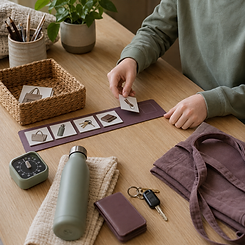
Everyday activities involve planning, remembering steps and responding when something does not go as expected. I use visual sequences, task boards, checklists and practical demonstrations to make these processes clearer and more manageable.
Learners are encouraged to think through what they need, follow a sequence, review their progress and explore possible solutions. Mistakes are treated as a natural part of learning, helping to build flexibility, resilience and confidence.
Building Skills for Life
Life skills develop gradually through meaningful experiences, trusted relationships and repeated opportunities to practise. Progress will look different for every learner, and even a small step towards greater participation can represent a significant achievement.
My aim is to help each child or young person develop practical skills, confidence and self-belief—supporting them to become as involved, capable and independent as possible in their own unique way.