Visual Systems and Structure
Clear visual information can make learning feel more predictable, manageable and accessible. Visual systems help learners understand what is happening, what is expected and what will happen next, reducing reliance on spoken instructions and working memory.
I use carefully personalised visual supports to promote understanding, communication, participation and independence. These are introduced sensitively and adapted to the learner’s age, preferences, strengths and individual learning profile.
Visual Timetables and Sequencing
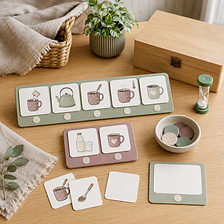
Visual timetables provide a clear overview of a session, activity or sequence of events. They can support learners to anticipate what will happen, prepare for transitions and recognise when an activity has finished.
Timetables may use photographs, symbols, pictures, written words or a combination of formats. Some learners benefit from seeing an entire session, while others feel more comfortable viewing only one or two activities at a time.
Step-by-step visual sequences can also make unfamiliar or multi-stage activities more achievable. By breaking a task into manageable parts, learners can follow the process with increasing confidence and independence.

Now and Next
A Now and Next board presents information in a simple and immediate format: what is happening now and what will happen afterwards.
This can help learners focus on the current activity while providing reassurance about what is coming next. It may be particularly supportive during transitions, less-preferred activities or when introducing something unfamiliar.
The approach is used flexibly and positively. The “next” activity may offer motivation, regulation, familiarity or simply a clear ending to the current task.

Choice, Communication and Control
Visual choices can help learners express their preferences, make meaningful decisions and feel more involved in their learning. Options may be presented using objects, photographs, symbols, pictures or written words, depending on what is most accessible to the individual.
Choice boards can support communication when spoken language is difficult, unavailable or does not fully reflect what the learner wishes to express. They may be used to select an activity, resource, topic, reward, sensory support or next learning experience.
Providing genuine choices helps learners develop self-advocacy, confidence and a greater sense of control.

Task Organisation and Independence
Clearly organised tasks can help learners understand where to begin, what needs to be completed and when the activity is finished.
I may use task boards, visual checklists, numbered activities, start-and-finish systems and organised work areas. These reduce the amount of repeated adult instruction required and provide a visual pathway through the task.
Support is carefully adjusted so that the learner can experience success while gradually developing greater confidence, responsibility and independence.

A Flexible and Personalised Approach
Visual structure should support the learner rather than control them. Systems are therefore introduced collaboratively, observed carefully and adapted in response to the learner’s communication, engagement and changing needs.
Some learners benefit from detailed visual sequences, while others may need only a simple prompt or checklist. Visual supports can be expanded during periods of change and gradually reduced as routines become familiar and independence grows.
My aim is to provide the right level of clarity and structure while respecting each learner’s autonomy, preferences and individual way of understanding the world.